
Alberta introduced Bill 42 on November 18, and the Legislative Assembly’s record shows that it passed first reading that day. The government proposes a 600-metre setback from the nearest home for new data centres of 10 megawatts or more, tighter rules for good farmland and irrigation land, a cooling-water standard and a new designation for electrical systems that serve the facilities. The bill would amend several laws. The government says further details would come through regulation and commission rules if it passes. A permit application will depend on those details as well as the advertised thresholds. Legislative Assembly record · Alberta government announcement
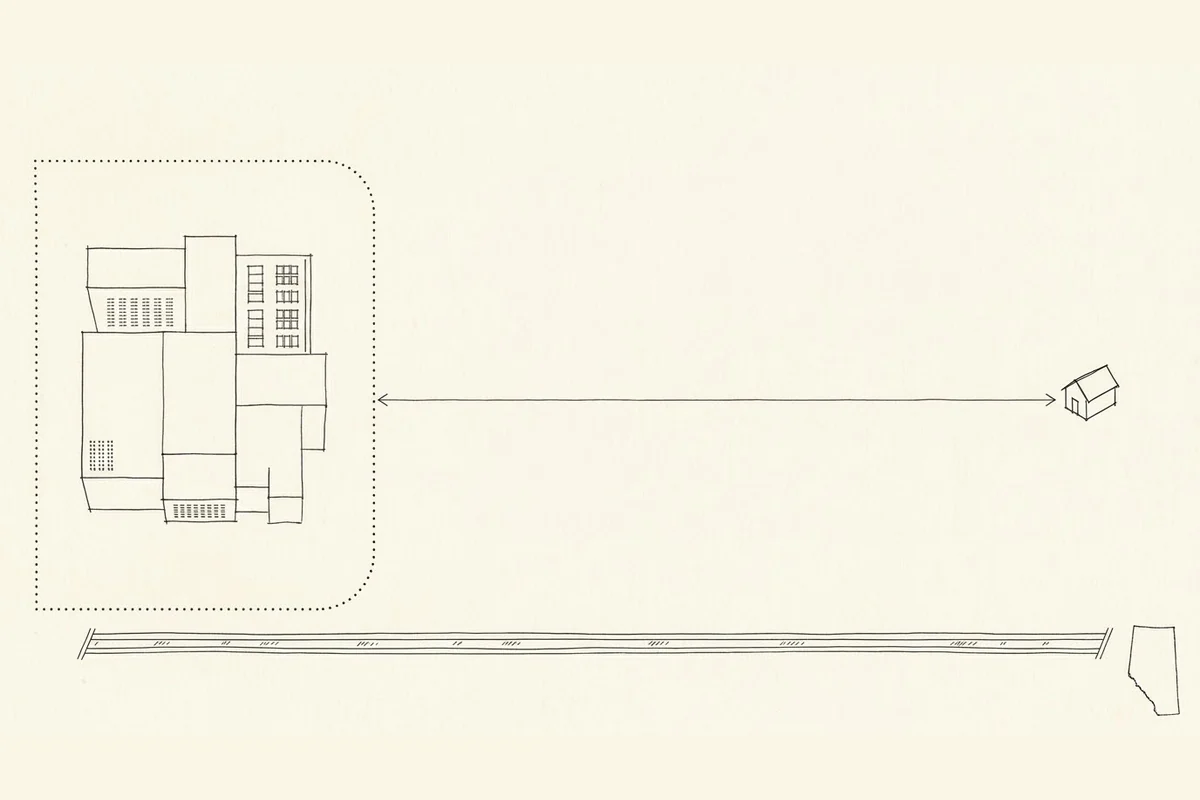
A developer can find land that is close to a power line and still face questions about the nearest house, availability of water and the cost of connecting equipment. A municipality can want investment and still need enough information to assess noise, construction and the effects on other utilities. Bill 42 tries to put several of those questions under a common provincial framework while leaving roles for municipalities and existing environmental authorities. Its main practical test will be whether a project can identify who makes each decision, what evidence is required and who pays for the answer.
The numbers in this proposal describe different things. Ten megawatts is the size at which the province wants its siting framework to apply. The bill also sets out an electrical designation that generally refers to a maximum direct transmission demand of 75 megawatts or to a lower threshold established by the independent system operator, with other criteria. The existing Data Centre Regulation has a threshold on the transmission demand of large centres as well. Combining the numbers would confuse the land-use proposal with the rules for a particular kind of power system. Bill 42 text · Existing Data Centre Regulation
A proposed setback starts a site review#
The government’s announcement describes a default distance of 600 metres for new projects at or above 10 megawatts, measured from the project site’s edge to the nearest home according to its public guidance. It would retain existing noise requirements and allow municipalities to seek a different setback from the Alberta Utilities Commission where local planning supports compatible development. The bill empowers the government to make regulations about the size threshold, land classes, construction and measurement of a setback. The figure appears in the policy description. A development team needs the eventual regulatory text to know how the rule applies to a parcel and which approvals it needs. Government data centre guidance · Legislative text
The difference between a mark on a map and an approval is visible on any large site. A parcel can be split by a public road. Equipment that produces noise can sit closer to one boundary than the building itself. Future construction may extend a facility beyond the point shown in the original plan. A developer has to say where the site ends and which facilities are part of it. Neighbours need enough information to see which part of a plan the setback covers. An implementation rule can tell people what has to be measured and by whom before a boundary becomes a source of disagreement.
A distance rule cannot describe all sound near a property. A large building can contain cooling equipment that operates continuously and backups that run during tests. Wind, terrain and the position of equipment can change what people hear. A setback creates space for the owner to meet operating requirements. The separate noise conditions can measure what happens at a home or other receiving point. The province says the proposal and existing noise rules would work together. A project with a compliant map still has to show that its operating conditions fit the location. Alberta’s Bill 42 overview
Agricultural land introduces another decision. The province describes protections for its highest-quality farmland and irrigated land. The government says the proposed protections cover about 14 million acres of Class 1 and 2 land, and address Class 3 land in municipalities without the first two classes. The bill’s framework uses prescribed definitions and designated high-quality land, with limited approval provisions and supporting regulations. A developer needs to verify what classification applies, which area would be used and how a proposal would affect the parcel’s current use. Those questions are separate from access to electricity. Government announcement on agriculture · Bill text
The government also says brownfield sites, designated industrial zones and existing power locations would be recognised as places that suit some industrial projects. Such a site can have access roads, utilities or a community accustomed to heavy equipment. It may also have existing environmental obligations or other industrial demands. Recognition and local planning can affect how the site is evaluated. They do not by themselves establish that land is available, that a facility is approved or that generation can serve the new load. Government overview of location requirements
One useful application record would keep a dated map of the parcel and a separate list of facts underlying it. The list can identify the proposed facility boundary, nearby occupied buildings, the land class and how irrigation is currently used. A change to any of those facts can affect the regulator’s decision. The map also gives the municipality a way to explain why an alternative setback could make sense in an industrial area and what conditions would apply. The purpose is to test the compatibility of a specific layout with the land around it.
The power threshold concerns a different kind of project#
The existing ministerial Data Centre Regulation primarily asks how a large load connects to the transmission system. It defines a large centre by a maximum instantaneous demand of 75 megawatts or more directly from transmission, or by a lower threshold set by the independent system operator when necessary. It establishes conditions for tying a centre to generation or storage and for some temporary access while that capacity is brought into service. Those concepts are already in a regulation. They do not answer how a new land-use standard would be applied. Text of the existing regulation
Bill 42’s proposed designation under the Hydro and Electric Energy Act addresses an electrical system that can include generating equipment and transmission facilities serving a data centre. In the general application route, the text includes a generator on the property intended to serve the system and maximum direct transmission demand at or above 75 megawatts or a lower applicable threshold. The commission would apply the criteria and could attach conditions. For an owner, a designation is a regulated status for a system. It does not follow automatically from reaching 10 megawatts under the contemplated siting rules. Bill 42, designation provisions
The bill shows one example of how wide the system boundary can be. Its schedule describes a statutorily designated system comprising four facilities owned by Vibro Information Services Ltd., two generating units, the Cougar switching station and lines linking the facilities and generation. The schedule would define the components covered by the legal mechanism if the relevant provisions come into force. It does not certify that the equipment has been installed, give an operating schedule or name the data centre’s customers. The value of the example is that it shows what governments mean when they regulate an electrical system together with a load. Bill 42 schedule
In an engineering model, connecting generation and load can reduce some demand on an external network. The operator still needs to describe what happens when the generator is unavailable, the data centre wants power before equipment is complete or one facility changes its load. Some computing jobs can be stopped or moved. A service expected to be continuously available can have different obligations. Terms for grid access and what a customer promises about availability have to be consistent. The regulatory decision cannot rely just on each side’s installed capacity.
A plant operator might quote a generator’s maximum steady output. An electricity buyer may be more concerned with what happens during scheduled maintenance and how long reserves can support the load. A data centre could avoid some downtime by shifting jobs to another location. It might still need electricity for networking, storage and maintenance. A contract for backup power will be most useful if it defines how much is available, when and for how long. Without those details, a claim that a project brings its own power does little to explain its demand on the system in unusual conditions.
The existing regulation gives a specific example of that relationship. When the independent system operator determines supply is inadequate, the rule calls for reducing demand at bridged data centres before other market participants receiving system access service. It separately prescribes priority reduction for large data centres when mandatory shedding is required under the listed conditions. The terms identify triggers and types of customer. They matter more than a claim that every piece of equipment at every site will be treated the same. A contract can reflect which connection service a facility actually obtains. Existing Data Centre Regulation, section 10
The government quotes a provincial generation capacity of 23,415 megawatts and peak demand of nearly 12,800 megawatts. Subtracting those figures would not tell a developer how much power is available at a particular substation or at a peak hour. Generation can be unavailable or variable, and the network has regional limits. Other loads have different schedules. A grid study looks at a connection under specific conditions. The gap between a provincial total and a local answer is why a site can require further investment even in a province with an active power market. Government figures on electricity and sites
Separating a project’s costs from other customers’ rates#
Alberta’s government says the proposed designation aims to keep a data centre’s own power infrastructure costs from being passed to ratepayers. The draft would exclude costs associated with a transmission facility forming part of a designated system from the relevant general rates. It would allow the facility owner to file a tariff with information including a legally binding contract showing how it would recover those costs and that the same costs were outside its general tariff. This makes the accounting test visible. The commission would need to see the components, the arrangement and the division of costs. Bill 42, proposed tariff provisions
The choice matters when a project builds new equipment that serves only its own load. For example, a developer might contract for a line between a generator and campus. A distinct tariff and contract can show that a particular owner pays for it. More questions arise where another customer uses an existing substation or a wider network must change. The regulator will have to examine which upgrades are within the designated system, which are elsewhere and which rules govern those bills. An infrastructure owner can publish enough about that allocation for people to understand it without releasing sensitive terms.
There is a provision for circumstances where the system operator needs access to part of a designated system’s transmission equipment. Under the proposed language it could seek a commission order. The commission could consider whether the equipment is needed for access and whether the designated system’s own requirements will continue to be met. It could also set rates and conditions for that access. This gives the proposal a boundary with an exception under review. Private funding for equipment can coexist with a defined use of that equipment by the wider network. Bill text, proposed section 40.1
The earlier Utilities Statutes Amendment Act, which received royal assent in December 2025, already laid a basis for encouraging data centres to bring their own generation and allocating needed transmission upgrades to the parties causing them. The new proposal would add specific ways to designate integrated electrical systems and show their internal wire costs. The effect depends on how the old and new tools work together. A claim about what ratepayers are protected from is clearest when it identifies the invoice and the rule that keeps it separate. Alberta’s account of the 2025 act · Bill 42 overview
Another question is what happens if a scheduled customer withdraws or a planned generator arrives late. A utility may already have incurred engineering or construction costs. If the project has to supply security or pay on milestones, a regulator can see who bears those costs. The draft’s proposal does not set a uniform construction agreement for every applicant. It creates a path to document how a designated facility will pay. Project-level contracts and tariff decisions will determine whether the arrangement remains workable under delay.
Near-zero cooling water needs a measurable boundary#
The government says the proposal and supporting regulations would aim to bring cooling water use close to zero and require monitoring. Cooling may use a closed fluid loop, an evaporative stage or a system that rejects much of its heat to the air. A chosen design can reduce demand for water during ordinary operation and still need water for initial fill, maintenance or particular conditions. To allow comparisons, a standard has to say which sources and uses count, when readings are taken and whether they refer to withdrawal or actual consumption. The government’s announcement gives the goal. The implementation will have to define the measure. Provincial facility guidance · Government announcement
Water and power can trade places in a cooling system’s costs. Maintaining a desired temperature in dry equipment may increase electricity use during hot weather. Another design can use some water to reduce the electrical demand of heat rejection. A particular project may mix approaches as temperatures change. The relevant evidence is a schedule of expected electricity and water use at conditions the site can experience, with a plan to measure results once it is operating. A reader should be able to compare the plan with data across a year, including periods when the site has high demand.
The unit of reporting can affect a comparison. Litres per year tell a community about total demand. Litres per unit of computing electricity can help compare facilities and periods with different loads. Reporting the water source and month can reveal a local constraint that an annual average conceals. Water used to make electricity elsewhere may sit outside the site boundary. A regulator can decide which metrics belong in a cooling-water standard and which need to be reported separately. A clear boundary makes it possible to see whether a design consumes less water or simply moves the demand.
The proposal that waste heat should be recoverable has its own practical boundary. A server releases heat as it does work. An owner can design an outlet for using part of that energy. Someone must be able to use it at the temperature, time and distance available. A greenhouse or industrial user may need more warmth on some days and less on others. Connections and pumps have costs. Preparing a building so it can make heat available is a real engineering decision. A signed offtake, delivered heat measurements and maintenance terms show a further stage. Government explanation of heat recovery
Consider a project that claims it can send warm water to a facility across a road. Its plan needs to establish the usable temperature, what happens in summer, who pays for the connection and how the parties handle downtime. The recipient may need backup heat. A connection suitable for one kind of heat demand may be uneconomic for a more distant customer. Forward plans can protect space for heat reuse while those questions are resolved. Readers can see the difference if the project labels the equipment installed, the amount potentially available and the amount actually used.
Oversight also has to continue beyond commissioning. A facility can start with a limited load and later add racks, extra generators or cooling equipment. Changes can affect noise, water and nearby roads without moving the site edge. A regulator’s conditions can describe which changes require further review and which measurements must be reported. That design makes the site test repeatable. Under the government’s proposal the AUC would take the main provincial role for 10-megawatt-and-larger facilities while environmental and water approvals remain with the appropriate authorities. Alberta’s description of oversight
Local feedback makes the test observable#
The province says it held four public meetings in August and September and gathered survey responses. Its published summary mentions concerns about siting, electrical and water supplies and the government’s ability to enforce its rules. In the November announcement, Sturgeon County’s mayor welcomed more clarity and also called attention to cumulative transport and emissions issues, among others. These are reported concerns and public statements, without a count of how residents view each proposal. They identify practical issues a single site approval can miss when several projects share infrastructure. Alberta engagement record · Government announcement and local statements
Consider two planned buildings that each meet a reasonable noise requirement and use separate roads for parts of their own construction. The combined construction period could still affect a route that the municipality maintains. Likewise, two small water systems can add up during the same dry period. A public record can show what the site is directly responsible for, what neighbouring operators are already using and which entity can address the aggregate effects. This is how a concern expressed at a meeting can turn into a test of specific equipment, usage or funding.
Publication should also show what the relevant authority is deciding at each stage. If a municipality requests a setback adjustment, families will want to know the application area, its reasons and the conditions the commission will review. If a developer asks to designate a power system, an operator and nearby users will want to know connection requirements and how costs are recovered. When water or noise is measured, the time and method make the numbers comparable. One set of rules helps most when those details become visible before a construction commitment. Proposed Alberta approach to permit details
Investment can benefit from the same clarity. Before signing a purchase order for generators or committing to a land deal, an owner needs enough confidence about approvals and utility arrangements to estimate cost and time. A published map of site constraints, a known tariff route and reliable consultation make the first estimate more useful. They also let an investor see where costs could increase if it needs to change cooling equipment or negotiate an additional contract. More detailed rules can reduce uncertainty even when they make some sites harder to develop.
At the recorded stage, a developer can examine the bill and the province’s announced policy. It will still need to watch the Assembly for changes, regulation for the exact thresholds and standards, and later project decisions for the commitments actually imposed. The three will answer different questions. One establishes authority, one defines a method and one shows how it applied to a particular place. Publishing those records is how the province can demonstrate that a centre is bearing its own costs and managing its site within the agreed limits. Assembly record · Alberta’s next steps
The test will be different in each community. Families can ask where a facility begins and how much resource use is expected under realistic conditions. A developer can ask what connection it will receive and which of the costs its customer has agreed to bear. Both groups can ask how they will know whether those terms were followed. Bill 42 makes these questions part of the proposed framework. Its effect will become clear when the distance, power and water rules are used to make an actual decision.