
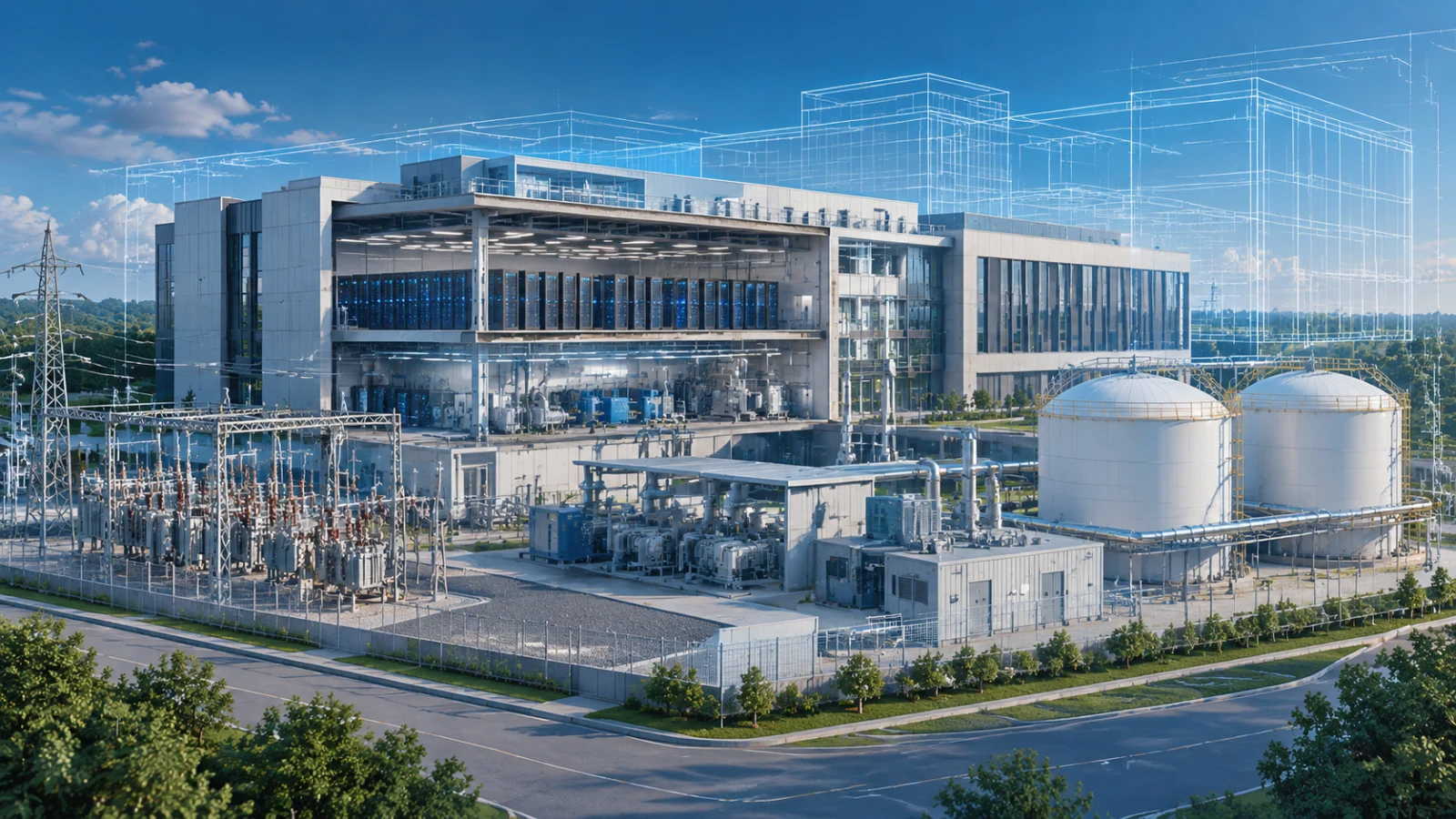
Alpha Compute announced on November 19, 2026, that it had closed the acquisition of assets for its Alpha Energy 02 campus in Wilcox, Elk County, Pennsylvania. The $5.5 million transaction brings 321 surface acres, 87 shallow oil and gas wells, mineral rights and equipment into two subsidiaries. The company plans to add on-site generation and data-centre buildings in stages. It expects to begin with a 10-megawatt liquefied natural gas microgrid within nine months and build toward 200 megawatts within eighteen months or less. Those are development targets in the announcement. The acquisition of the underlying assets is the step the filing records as complete. Alpha Compute's Form 6-K · Company announcement
The proposal tackles a genuine constraint in building computing infrastructure: how to put a dependable supply of electricity beside the machines. Owning land with energy resources can give a developer more options. It also puts fuel production, fuel delivery and generation onto the list of jobs the developer must organise. Alpha's first useful test is its initial phase. It needs to demonstrate that the equipment, fuel, permits and cooling will support a specific amount of customer computing through an ordinary week and through maintenance. The value of the site will become clearer as those interfaces move from a plan to an operating system.
What changed hands#
Alpha first announced the purchase agreement in September and later issued a due-diligence update. The November filing identifies a closed transaction and describes maintenance facilities, heavy equipment, gathering infrastructure and pump jacks alongside the land and rights. That is a meaningful package for an energy project. Gathering infrastructure collects fuel from wells and moves it toward processing or use. The title and condition of such assets help determine what can be done next. Data-centre generation has additional requirements. An electrical output suitable for a facility comes from equipment that can receive the fuel, operate steadily and deliver power through the site's distribution system. September agreement filing · November acquisition filing
The company says oil production and sales are expected to begin after Pennsylvania's Department of Environmental Protection approves it as operator. Ownership and the authority to operate are separate parts of that chain. Pennsylvania's own well-transfer guidance asks operators to supply the relevant information and transfer documents. It gives a developer and the former operator reason to be precise about who is responsible for each well at each stage. For someone assessing the campus, the practical milestone is approval covering the relevant operations and evidence of what the assets produce under the new operator. A closing document establishes the asset transaction while that process continues. Alpha's stated operating condition · Pennsylvania well-transfer information
The land is an advantage if it supports the physical plan. A developer needs places for generation, fuel handling, electrical equipment, roads and the buildings that contain the computing load. Access, construction staging and the routes of pipes and cables affect where those pieces go. Existing equipment can be useful where it fits the next operating requirements. It can also carry work of inspection, maintenance or replacement. A site map with the first phase and the paths between its components would make the transition easy to understand. The acreage gives space to design. The design has to show what that space can reliably support.
The gas quantity needs a production plan#
Alpha says petroleum consultant Netherland, Sewell & Associates assessed the deeper Marcellus and Utica formations and estimated a best case of 22.5 billion cubic feet of gross contingent gas resources. The announced low and high estimates are 14.6 and 34.6 billion cubic feet. The assessment excludes additional gas currently produced and sold from shallower formations. In its qualifications, the company says the assessed volumes are contingent resources with unresolved conditions for commercial development. Each part matters. The deeper estimate describes a potential source that needs development. The existing shallow activity describes a different supply with its own production history and operating status. Company assessment and qualifications
The Society of Petroleum Engineers' resource framework distinguishes technical uncertainty from the chance that a project becomes commercial. It places discovered resources with remaining development contingencies in their appropriate class. A buyer can therefore use an estimate to understand what might be recoverable while still requiring a plan for producing it. That plan involves well performance, drilling or completion where needed, facilities and economics. An estimate of gas under the site can survive even if the initial power phase uses delivered fuel, because the two statements address different times. The path between them is the work the developer has proposed. SPE explanation of the resources framework
A gas volume and a power rating also have different units for a reason. Cubic feet describe an amount of fuel under stated conditions. Megawatts describe a rate of electrical output or demand. Connecting them requires the fuel's heat content, generator efficiency, operating hours and the quantity available to use over time. The Energy Information Administration says the heat content of delivered natural gas varies by source and period. A local resource assessment needs its own relevant values. A generation project also needs the rate at which the wells or supply system can deliver fuel on a cold day or through maintenance, as well as the aggregate quantity. EIA explanation of gas heat content
The headline of Alpha's release uses 430 megawatts of secured natural-gas power. Its body describes the initial 10-megawatt phase and a subsequent target toward 200. The materials provide no calculation joining the larger headline figure to commissioned generation or to an hourly fuel-delivery contract. The engineering account should consequently begin with the defined phases and seek the missing assumptions for the larger number. A useful later document could specify the generating units, their output conditions and the fuel required to run them. That would let customers compare a capacity label with the electricity actually available at the site. Alpha's complete release
LNG gets the first phase moving#
The developer's proposal begins with liquefied natural gas, then moves toward gas produced on site as development progresses, using the same generation equipment. The Department of Energy explains LNG as gas cooled into a liquid for more compact storage and transport. It has to return to a gaseous state for a generator designed to use gas. That adds a supply chain with delivery, storage, handling and regasification to the first phase. The choice could give the campus a starting fuel source while the local wells and deeper resource are developed. Its usefulness depends on contracts and equipment that make that delivery repeatable. Alpha's phased fuel proposal · DOE LNG overview
Imagine an operator taking the initial capacity into service. It has to know how much fuel is on hand, when the next delivery arrives and how long the supply covers the actual operating load. Bad weather, a vehicle delay or work on the handling equipment can matter. A fuel contract with a volume, specification and delivery schedule is therefore an engineering input. The stored quantity needs to match the reliability target and local operating requirements. If a customer's computing can pause, the site may have more flexibility. A customer paying for continuous availability will ask how the supply continues while one part of the fuel system is unavailable.
Switching to production from the site has another set of interfaces. Gas from a well has to arrive at an acceptable pressure and quality for the generating plant. Gathering, treatment and compression may be needed depending on the source and equipment. A design that uses the same generating units with two sources can be helpful if the upstream systems meet those units' requirements. It still has to show the changeover sequence and how output remains stable. The more clearly that sequence is defined, the easier it is to judge the benefit of having fuel beneath the land. The work between a well and the generator is part of the supply.
The announcement also refers to a major gas pipeline beneath the property as an expansion option. A pipeline on a map can create a useful prospect, but access to fuel depends on the relevant connection and service terms. A potential customer would want the capacity available at the planned pressure, the work needed for the connection and the obligations when demand on the pipeline is high. It would also need clarity on who pays for that work. A site with several possible fuel sources has options to evaluate. A documented supply arrangement is what turns an option into an operating input. Alpha's pipeline and development description
The cost can be made equally legible. A power offer might use a fixed charge for available capacity and a variable charge related to fuel and energy delivered. Other contracts allocate costs in different ways. Whichever structure a developer chooses, the customer needs the assumptions behind the offered rate and a description of which party bears fuel-price changes. It also needs to know how an interrupted delivery is treated. A quoted energy price can be attractive when consumption is steady and disappointing when a low-use month still carries large fixed charges. Showing those pieces early would help potential tenants match the campus with their actual work.
Power at the site and power for the racks#
The first ten megawatts need a boundary on the electrical drawing. A generator's gross rating can include output that is consumed by the generating plant itself. The electricity available for the data-centre facility then has to support cooling, pumps, distribution losses and IT. The Department of Energy's design guide defines power usage effectiveness through total facility energy divided by IT energy. It is a useful discipline for locating the overhead. A developer should also state how it applies its power capacity figures at design load. A 10-megawatt generating plant and ten megawatts available to servers do not automatically describe the same project. DOE data-centre design and energy guide
Consider a customer asking for a specified block of reliable IT power. The engineering offer needs to indicate what remains available during generator maintenance, how transient loads are handled and what happens when a unit trips. Batteries or other support can bridge particular events, with their duration and recharge requirements stated. Parallel units can provide additional paths when properly designed. The customer is paying for a usable service under agreed conditions, so the test is what the installation delivers through the events the contract covers. Those operating cases are easier to evaluate than a single capacity number in a headline.
The computing load itself can offer flexibility if the customer agrees to it. A scheduled batch of training can sometimes be moved to another time, whereas a service responding to end users may require prompt replies throughout the day. Checkpointing, spare capacity elsewhere and the way storage is replicated can change the impact of an interruption. Those are design choices with costs on the computing side. They should appear in the service description if they are part of how the operator meets its promise. The opportunity to run a job flexibly is useful when both parties know what can be delayed and how progress will be preserved.
The same questions grow with the second phase. A target toward 200 megawatts is twenty times the initial ten. Fuel logistics, electrical distribution and cooling have to grow with it. Some equipment can be duplicated in modules, while other systems need a larger initial design or a different operating plan. A customer might be comfortable leasing the first block while later work takes place if the construction is separated and the critical systems remain protected. That requires details about phased commissioning and the boundaries of each service. The growth rate on the schedule is useful only alongside the equipment and dependencies needed to achieve it.
A building label has to reach the drawings#
Alpha proposes two barn-style data-centre halls of roughly 25,000 square feet each and describes them as Tier III. It says it wants the buildings to fit the site's character. Floor area can help describe the proposed physical footprint. The amount of computing it supports will depend on the layout, rack density, cooling and the power assigned to each hall. A reliability designation requires corresponding design and operating evidence. The announcement identifies the intended standard for the halls. Design review, construction records and independent certification where pursued are later ways to substantiate it for customers. Proposed hall design in the announcement
The most useful plan would connect a rack's required heat removal to a cooling system that still works during service. It would identify whether the first equipment uses air, water or a combination, and what that means for external supplies. It would show the electrical paths from the generator plant to the rack and the components that can be isolated. It would also explain the route to the network, because a powered server with an inadequate connection can be the wrong product for the intended buyer. These are ordinary design jobs. On a phased campus, they need to be finished in time for the first customers rather than deferred to the final build-out.
Commissioning is where those drawings meet the installation. The operator can verify the paths under load, record how the cooling responds and check the behaviour when components are deliberately taken out of service under a controlled test. Customers need a record that corresponds to the exact block they will use. A later phase can have a different configuration and another acceptance process. This makes a small initial phase potentially valuable as evidence: it can show the team completing the full route from fuel to working racks. The next expansion then has a tested starting point, alongside the new work that increasing scale introduces.
What the site still has to obtain#
Alpha says it expects to offer future data-centre capacity and power purchase agreements when the first designs are final. The statement identifies a planned commercial step. The materials do not name a signed customer for this campus, a delivered electricity tariff or the terms of a power offtake. A purchaser should eventually be able to identify its capacity block, delivery date, performance commitment and the price basis over time. For a developer, an anchor customer can help align equipment orders and financing with a real load. A pipeline of potential buyers can be useful, but building against a binding need is a more specific undertaking. Alpha's customer and power-contract plans
There is a long cost chain behind a power price. Delivered fuel, conversion losses, equipment financing, maintenance, staff and emission controls all have to be covered, with a return for the supplier. Gas produced on site introduces development and well costs into that chain. A cheap resource can be attractive while the full cost of the electricity remains dependent on other equipment and utilisation. The $5.5 million acquisition amount tells a reader what was paid for the disclosed underlying assets. It gives little basis for pricing a finished campus. The later construction and service contracts will show what has been financed and what a customer must pay.
The company says it will hire locally, pay property taxes and put community commitments into an agreement. It also describes education, health and regenerative-farming services it would like to develop. Each can become a useful part of the local proposition if the obligations, funding and timeline are documented. These plans sit alongside the industrial development rather than replacing its requirements. Neighbours and customers can ask for separate records of construction, traffic, emissions and long-term service. Local experience in oil and gas can help with some work at the site, and employment depends on what phases are actually built and operated. Alpha's local commitments
On-site power still has a regulatory context. The Environmental Protection Agency lists stationary engines and turbines used for primary and backup data-centre power as sources subject to relevant air-emission requirements. The design has to identify which equipment is proposed and what permits apply to its use. That affects what can be built and how often it can operate. It also gives neighbours a place to look for the operating conditions. A local power system can avoid some dependencies of grid delivery, while continuing to depend on fuel, equipment and permissions. A clear record of those dependencies helps everyone judge how fast the campus can responsibly proceed. EPA resources for data-centre power sources
For nearby residents, that record should connect the permit to the equipment and schedule they can see. A delivery route, hours of construction, expected generator operation and a named contact are more informative than a broad claim about jobs or power. Public participation can identify conditions a developer's initial layout missed, while an enforceable operating limit gives everyone a common basis for follow-up. Local hiring and community services can add benefits once arrangements exist. The quality of the industrial plan also determines what kind of neighbour the campus will be. These two parts of the project can be described together with their own obligations and dates.
The opportunity has an order of work#
The project sits in a wider push to bring generation closer to computing. The International Energy Agency's recent analysis describes arrangements in which a campus initially uses on-site supply and later obtains a grid connection. That can be an answer to long waits for a particular external power route. It can also create a lasting obligation to operate generation. Every proposal needs its own balance of timing, reliability, cost and local conditions. Alpha's plan is most understandable as a sequence of assets and operating steps, with the first power block providing evidence for the next. IEA analysis of power for artificial intelligence
Alpha's SEC description of the company focuses on acquiring, deploying and leasing high-performance GPUs, including confidential computing. Owning fuel and real estate would broaden that position. In principle, a developer that coordinates the site, energy and machines can make decisions across the whole chain. It also has to manage disciplines that each have their own construction times and operating risks. The combination is valuable if the pieces work together at a price customers accept. The financial picture will become more specific as subsequent filings show the capital committed to this campus, the resulting liabilities and contracts that produce revenue from it. Alpha's description in its annual filing
The next milestones are consequently straightforward to name. The well operating approvals, first designs, equipment orders and fuel arrangements can show whether the first phase is progressing. A construction permit, installed equipment and commissioning results can establish what capacity has actually reached service. Customer agreements can establish who will use it and under what performance and price terms. The public can then compare a target of ten megawatts with a functioning first phase, and the plan toward two hundred with an ordered expansion. These records would show far more than an attempt to convert all of the subsurface gas into one electrical label.
An energy-bearing site can be a promising start for a computing campus. Alpha has reported completing the purchase that gives it that start. The engineering case now rests on turning the fuel and land into a reliable service, one block at a time. If the first phase demonstrates repeatable fuel delivery, usable power and a customer load that runs through maintenance, the later scale targets will gain practical support. Until those operating results arrive, the most concrete assets in this announcement remain the land, wells and equipment that the company has bought, with a power system and data halls still to be delivered.